Short Story Engine Review: How Authors Can Build Readers Before Their Book Launch
Short Story Engine Review: How authors can use short stories to build readers before launch day. Explores companion story frameworks, reader magnets, and pre-launch strategy.
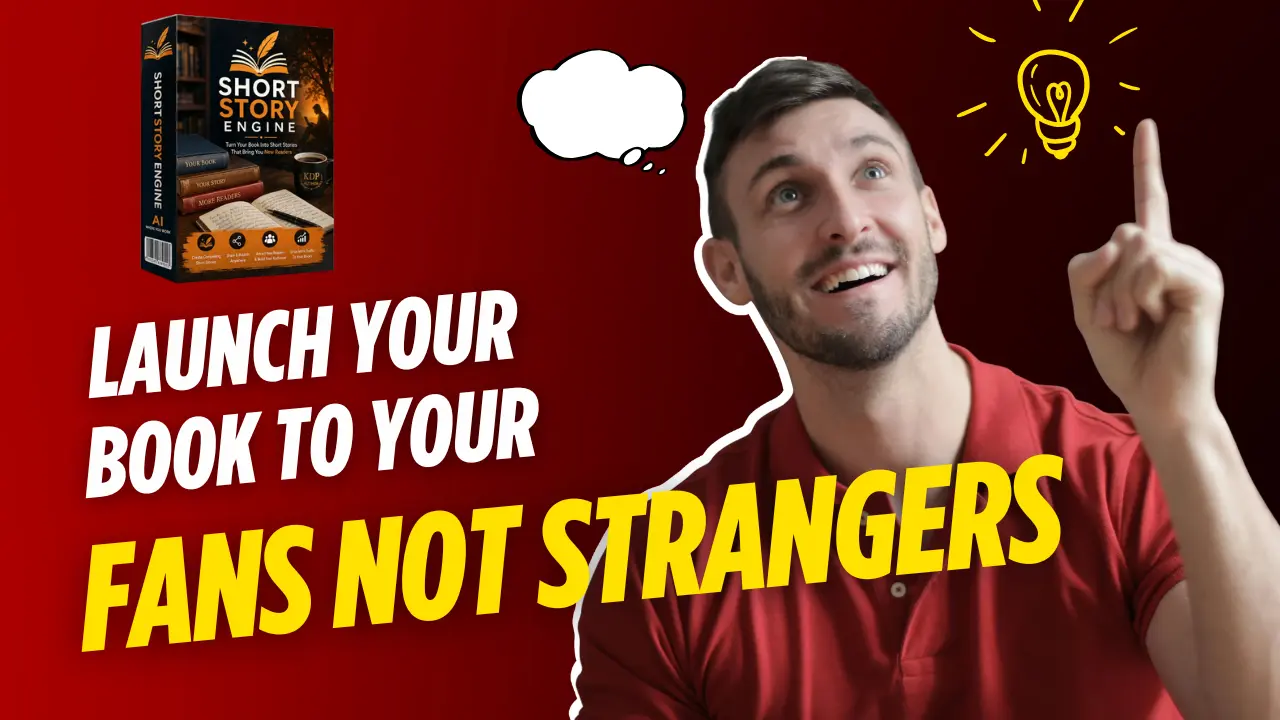
Introduction: Don't Wait Until Launch Day To Find Your Readers
Every self-published author knows the moment: your book is live on Amazon. The cover looks great. The description is compelling. You've formatted it perfectly. You hit publish.
And then... nothing happens.
You realize too late that you've been working backward. You spent months or years writing and publishing a book, and only now—on launch day—are you asking yourself: "How do I find readers?"
By then, it's too late to fix what should have started much earlier.
Most publishing systems teach the same sequence: write the book, design the cover, publish it, then figure out how to get readers. It sounds logical. But strategically, it's backwards.
What if you could start building an audience before launch day ever arrives?
This is the premise behind Short Story Engine—a tool designed to help authors create short companion stories that introduce readers to their work, build email lists, and establish an audience before the main book even launches.
This article explores whether the pre-launch audience strategy makes sense for your situation, how Short Story Engine facilitates it, and whether the $27 investment is worth testing this alternative approach.
>>>>> Visit Official Website <<<<<
The Traditional Book Launch Problem: Starting From Zero
The conventional publishing timeline looks like this:
Write → Publish → Find Readers
Authors spend months (or years) creating the book. They invest time in cover design, formatting, and launch planning. Then, the moment the book goes live, they face an uncomfortable reality: they're asking complete strangers to spend money on their work.
Those strangers don't know the author's name. They've never read the author's writing. They don't understand the character development, the unique voice, or why this book matters. The only thing they're reacting to is a sales page and marketing copy.
It's a cold introduction followed immediately by a large ask.
Why This Matters
According to the sales positioning, this launch position is disadvantageous for several reasons:
You have no social proof — No one has experienced your work yet
You're starting attention-building from zero — On the exact day you need momentum most
Your first interaction asks for money — Creating friction instead of familiarity
You have no email list — No way to stay in contact with interested readers
Readers must trust your marketing pitch — Rather than having already experienced your writing
In other words, you're asking readers to make three leaps simultaneously: trust the unknown author, believe the book is worth reading, and decide it's worth their money.
Why Authors Need Readers Before Launch: The Strategic Advantage
What if you started building that audience months before launch day?
The Psychology of Lower-Friction Entry Points
Short Story Engine's philosophy is based on a simple observation: not everyone is ready to buy a $9.99 book from an unknown author. But many would read a free short story.
A short story asks for:
No financial commitment
Less time investment than a full book
Proof of the author's writing ability before a purchase decision
An experience rather than a promise
If the short story is good, the reader has now experienced your work firsthand. The next step—discovering the full book—becomes a natural progression rather than a risky leap.
Building Familiarity and Authority
Readers who have already:
Read your short stories
Opened your emails
Met your characters
Followed your story world
Chosen to hear from you again
...are launching into your main book from a position of familiarity, not curiosity about a stranger.
This is fundamentally different. You're not introducing yourself on launch day. You're giving people who already know your work something more.
>>>>> Visit Official Website <<<<<
What Is Short Story Engine?
Short Story Engine is an AI-powered tool designed to help authors create short companion stories as reader-discovery assets.
The tool combines three elements:
AI Story Creation Engine — Generates short story drafts based on your book, characters, concepts, or story world
Seven Companion-Story Frameworks — Pre-built templates for types of stories that work as discovery content (prequels, missing scenes, side characters, etc.)
Short Story Traffic Playbook — Strategic guidance for turning stories into reader magnets, email list builders, and launch preparation
It's important to note what Short Story Engine isn't: it's not just "AI writes stories." You can get that from ChatGPT. What makes Short Story Engine different is the strategic framework built around using stories specifically for pre-launch audience building.
Launching to Strangers vs. Launching to Fans: Two Very Different Scenarios
Scenario 1: The Traditional Approach (Launching to Strangers)
Author A writes their book, formats it, designs the cover, and publishes.
On launch day:
The book goes live
They immediately need traffic and readers
They start trying to find attention
They're asking complete strangers to buy
The problem: creating attention, building trust, generating interest, and asking for a sale all happen simultaneously.
Scenario 2: The Short Story Engine Approach (Launching to Fans)
Author B recognizes the problem early. While still writing the full book, they:
Create a short story from their concept, characters, or existing material
Share it with interested readers
Build an email list of people who've already read their work
Create multiple short stories over several months
Develop audience interest in parallel with writing
Eventually launch the full book
On launch day, Author B can say: "The full book is ready"—not to strangers, but to readers who already know the characters, have experienced the writing, and are already on the email list.
The Difference This Makes
Author A launches to strangers and must immediately prove value.
Author B launches to readers who've already decided they like the author's work.
Neither approach guarantees sales. But they're launching from fundamentally different positions.
Using Short Stories as a First Introduction: The Smaller First Yes
Short Story Engine positions short stories as a "smaller first yes"—a lower-friction entry point than asking someone to buy a full book.
The Traditional Funnel vs. The Story-Focused Funnel
Without short stories: Unknown Author → Amazon Page → Decision: "Should I buy this book?" → (Usually: No)
With short stories: Unknown Author → Free Short Story → Decision: "Did I enjoy this?" → (Often: Yes) → Email List → Main Book Launch → Informed Purchase Decision
The second path has more stages, but each stage is smaller. The reader doesn't decide on the entire book based on a description. They decide on a short story based on actually experiencing the writing.
Why This Works
According to Short Story Engine's philosophy:
Marketing claims: "My book is worth reading"
A short story demonstrates: "Here. Decide for yourself."
One asks for trust. The other gives experience. Experience is more powerful.
Seven Types of Companion Stories: Practical Examples
Short Story Engine provides seven specific frameworks for creating stories that work as discovery content:
1. Prequel Stories
What it is: A story set before your main book begins.
Example: If your mystery novel starts when a detective takes a cold case, the prequel could show why this detective became obsessed with solving injustices—perhaps a personal loss in their past.
Why it works: Readers get to know your character and world before committing to the full book.
2. Missing Scenes
What it is: An off-page event from your book told as a complete story.
Example: A romance novel has a crucial conversation that happens between chapters. The missing scene shows that exact dialogue and emotional impact.
Why it works: Feels like exclusive insider content—something that makes readers feel like they're getting more than the basic book.
3. Side-Character Spotlights
What it is: A supporting character becomes the protagonist of their own story.
Example: Your fantasy novel features a merchant who appears briefly. A spotlight story shows her day, her conflicts, and her role in the world.
Why it works: Readers can discover your world through someone other than your main character. If they connect with the side character, they'll want to see their full arc in the main book.
4. Character Origin Stories
What it is: Deep exploration of how a character became who they are.
Example: Why did your protagonist choose this profession? What wound or defining moment shaped their core belief?
Why it works: Readers fall in love with the character before encountering the main story.
5. Seasonal Stories
What it is: A standalone narrative tied to a holiday, season, or anniversary.
Example: A Christmas story with your characters. A back-to-school story for YA. An anniversary special featuring a beloved couple.
Why it works: Can be published at relevant times throughout the year, creating multiple opportunities for readers to discover your work.
6. Bridge Stories
What it is: Content connecting different books in a series or different phases of a longer narrative.
Example: Between Book 1 and Book 2, a bridge story resolves a cliffhanger or introduces the next conflict, keeping readers engaged while you finish the full sequel.
Why it works: Readers don't go cold between books. The audience relationship stays warm.
7. Reader-Magnet Exclusives
What it is: A complete story readers access only by joining your email list.
Example: "Sign up for my newsletter and get this exclusive short story about [character] that doesn't appear anywhere else."
Why it works: Instead of "join my newsletter," you offer something concrete: an actual story. That's a real exchange of value.
>>>>> Visit Official Website <<<<<
Building an Email Reader List: From Story to Subscriber
One of Short Story Engine's core functions is helping authors convert story readers into email subscribers.
Why Email Lists Matter
An email list is one of the few reader assets you actually own. Social media algorithms change. Amazon rankings fluctuate. Ads get expensive. But your email list is yours.
When readers are on your email list:
You can reach them directly (no algorithm interference)
You can stay in contact between book launches
You have permission to sell to them
You can build long-term relationships
The Reader Magnet Strategy
According to the Short Story Engine philosophy, a reader magnet works better when it's specific rather than generic.
Generic approach: "Join my newsletter for writing tips and updates"
Story-specific approach: "Get this exclusive short story by joining my reader list"
The second option is more concrete. The reader knows exactly what they're getting. And they're getting actual entertainment, not just promises of future value.
How This Works in Practice
Create a short story (using one of the seven frameworks)
Designate it as "exclusive to email subscribers"
Promote the story across your platforms
Direct interested readers to an email signup page
Upon signup, they immediately get the story
Now you have their email and can share future releases, launch announcements, and additional stories
This converts one-time story readers into ongoing subscribers.
Creating Reader Magnets: The Exclusive Offer Strategy
A reader magnet is simply a valuable incentive designed to encourage email signup.
Why Exclusive Stories Work as Magnets
According to Short Story Engine's positioning, an exclusive short story has built-in advantages:
It's concrete — Readers know exactly what they're getting (a complete story), not a vague promise
It has perceived value — It's something you created, not a generic guide
It demonstrates quality — If the story is good, it proves your writing ability
It creates scarcity — "Exclusive to subscribers" implies they can't get it anywhere else
It's immediately useful — No wait for value delivery
Practical Example: A Series Reader Magnet
Let's say you write fantasy romance. Your main book launches in 6 months.
Month 1: You create an exclusive origin story showing how your main character discovered their magical ability. You promote this on social media, your blog, and anywhere you can reach potential readers. The story is available only to email subscribers.
Result: 150 people join your email list.
Month 3: You release a bridge story connecting the prequel to your main character's journey in the full book. Another 100 subscribers.
Month 6: Your book launches. You now have 250+ email subscribers who've already read your work and are waiting for the full story.
Launch day email: "The full book is finally ready. All these people have already met your characters."
That's a dramatically different launch position than having zero email subscribers.
Using Stories on Social Media: Content Repurposing Strategy
According to Short Story Engine's Traffic Playbook, one story shouldn't be used only once.
From One Story to Multiple Content Pieces
A single completed short story can become:
Full story posts (on blog, Substack, Medium)
Serialized content (one scene per day across a week)
Social media hooks (opening lines designed to intrigue)
Character quotes (memorable dialogue shared independently)
Scene excerpts (the most compelling 300 words)
Behind-the-scenes content (how you created the story)
Discussion prompts (questions for readers to engage with)
Newsletter features (expanding on the story each week)
Why This Matters
Content repurposing extends your reach without requiring constant new creation. You create one story, then extract weeks of promotional and engagement content from it.
Short Story Engine Traffic Playbook: The Strategic Component
The Traffic Playbook is the strategy guide included with Short Story Engine purchase. It addresses a critical question: "Okay, I created a short story. Now what?"
What The Playbook Covers
Week 1 — Create & Introduce
Finish the story
Create teaser material
Build curiosity through social posts and email
Week 2 — Share & Serialize
Publish excerpts across platforms
Serialize the story (part 1, part 2, etc.)
Keep the story visible without repeating "buy my book"
Week 3 — Capture Interest
Convert story readers into email subscribers
Offer the story as an exclusive reader magnet
Build your email list from engaged readers
Week 4 — Repurpose & Reconnect
Extract quotes and highlights from the story
Use story themes to promote your main book
Plan your next companion story
This structure turns random story creation into a systematic audience-building process.
>>>>> Visit Official Website <<<<<
Example Pre-Launch Strategy: Practical Timeline
Let's build a realistic example of how an author might use Short Story Engine in the 6 months before a book launch:
Month 1: Prequel Story
Author creates an origin story introducing the main character
Promotes across social media, blog, and email
Offers as exclusive to newsletter subscribers
Result: 75 email subscribers
Month 2: Missing Scene Story
Author creates a missing scene showing a pivotal moment in the character's past
Serializes across social media over 2 weeks
Collects another 40 email subscribers
Email list: 115 subscribers
Month 3: Side-Character Spotlight
Author develops a secondary character into a full short story
Newsletter subscribers get early access
Public version releases 1 week later
Result: 60 more subscribers
Email list: 175 subscribers
Month 4-5: Seasonal Story + Bridge Content
Author creates holiday-themed story featuring main characters
Releases second bridge story connecting to the main plot
Email list grows to: 240 subscribers
Month 6: Main Book Launch
Author has 240+ email subscribers who've already read their work
Email announcement: "The full book is ready"
Existing readers already know characters, trust the author's writing ability
Launch has built-in audience momentum
This isn't guaranteed to make the book a bestseller. But it's a dramatically different launch position than starting with zero email subscribers and zero proof of writing quality.
Benefits and Limitations: Honest Assessment
Benefits of the Short Story Engine Approach
✓ Starts audience-building before launch day
✓ Provides concrete story frameworks (not blank-page paralysis)
✓ Includes strategic guidance with the tool
✓ Works for pre-launch, mid-launch, or post-launch situations
✓ Affordable entry point ($27)
✓ One-time payment (no subscription)
✓ Gives readers experience before asking for money
✓ Builds email list simultaneously with audience awareness
✓ Can be started even if main book isn't finished
Limitations and Challenges
✗ AI output requires significant editing before publishing
✗ Requires time investment (creation, editing, promotion)
✗ Doesn't guarantee book sales or reader engagement
✗ Requires external email platform (separate from Short Story Engine)
✗ Works better for fiction than some nonfiction genres
✗ Success depends on story quality and promotion execution
✗ General AI tools (ChatGPT) can generate stories without Short Story Engine
✗ No automation—you still have to create and market consistently
✗ Presupposes that pre-launch audience strategy is valuable (not all authors agree)
Who This Works Best For
The pre-launch audience strategy works best for:
KDP and self-published authors
Series writers
Fiction authors with rich story worlds
Authors willing to invest time in consistent content creation
Writers targeting email-engaged readers
Authors planning 6+ months before launch
Final Verdict: Is This Worth Pursuing?
Short Story Engine is fundamentally a philosophy tool wrapped in software.
The philosophy: Building audience before or during book creation, not after launch.
The tool: Framework, templates, and strategy for implementing that philosophy through short stories.
For Whom It Makes Sense
If you accept that pre-launch audience building matters, and you want structured guidance for doing it through short stories, Short Story Engine offers clear value at $27.
You get:
Seven specific story frameworks (eliminating guesswork)
A strategic playbook (turning stories into audience assets)
A one-time investment (no recurring fees)
A philosophy that challenges conventional publishing timelines
For Whom It Doesn't
If you:
Believe in finishing the book first, marketing later
Don't have time for consistent story creation and promotion
Prefer to use ChatGPT and figure out strategy yourself
Don't plan to build an email audience
Expect finished, publish-ready stories without editing
...then this tool won't address your needs.
The Bottom Line
Short Story Engine is worth $27 if the idea of starting audience-building before launch day resonates with you. It's worth testing if you're open to the philosophy.
It's not worth $27 if you're looking for a guarantee, automation, or a replacement for your own creative effort and marketing work.
>>>>> Visit Official Website <<<<<
Frequently Asked Questions
Do I need to have a finished book to use Short Story Engine?
No. You can start with:
A published book (to expand with companion stories)
A manuscript in progress
A detailed outline or character notes
Just a concept or premise
The tool accommodates different starting points.
Can I use ChatGPT instead?
Yes. ChatGPT can generate short stories. What Short Story Engine adds is the framework (seven specific templates) and the strategy (Traffic Playbook for using stories as audience-building assets).
If you're comfortable with ChatGPT and can devise your own strategy, ChatGPT is a viable free alternative.
Will short stories hurt my main book sales?
No. According to Short Story Engine's philosophy, you're not giving away the main product. A companion story expands the world without replacing the main book.
The goal is reader discovery, not cannibalization.
Do I need an email platform?
Yes, if you want to use stories as reader magnets. Short Story Engine creates stories; an external platform (ConvertKit, MailerLite, Substack, etc.) collects and manages subscribers.
How long does this take?
That depends on your pace. Some authors create one story per month. Others create multiple. The Traffic Playbook suggests a 4-week structure per story, but you can adjust to your schedule.
Does this guarantee my book will sell?
No. Short Story Engine improves your launch position by building audience beforehand. But book sales depend on story quality, market fit, pricing, reader promotion, and many factors outside the tool's control.
Can I use this for non-fiction?
The strongest fit is fiction and story-driven publishing. Non-fiction authors can use illustrative stories or case studies, but the frameworks are primarily designed for narrative fiction.
What if my book is already published?
That's fine. You can use your existing book as material for new companion stories, give the title more discovery opportunities, and build audience for your next book.
Conclusion: Start Earlier Than Launch Day
The fundamental insight behind Short Story Engine is simple: launch day is the worst possible moment to start building an audience.
By then, it's too late. You've already finished the expensive creative work. You've invested months of effort. The book exists. Now you're scrambling to find readers.
An alternative approach: start building audience earlier.
Not by writing a full book first—by creating short stories that introduce readers to your characters, your world, and your writing voice before asking them to commit to the full book.
Is Short Story Engine the only way to do this? No. But at $27, it offers a structured framework for trying the approach.
If you've been stuck thinking the only sequence is "write book, then find readers," this tool offers a philosophically different path.
Whether that path is right for you depends on whether you believe pre-launch audience building matters. If it does, Short Story Engine is worth testing.
>>>>> Visit Official Website <<<<<
Related Tags :
#ShortStoryEngine #ShortStoryEngineReview #AIStorytelling #AIWritingTool #AIStoryGenerator #StoryWriting #CreativeWriting #AIWriter #FictionWriting #StoryGenerator #WritingTools #AuthorTools #Authors #AspiringAuthors #SelfPublishing #IndieAuthors #BookWriting #FictionWriters #ContentCreators #AIContentCreation #WritingSoftware #StoryCreation #BookMarketing #AuthorMarketing #AIForWriters
Comments
Join the discussionNo comments yet. Be the first to comment.